Outside the Walls: A reflection for World Communion Sunday
We fear one another. Not in the abstract, textbook fashion that is found in sociology, but in the way that influences our voting behavior, the places we live in, the children we let ours play with, and the people we assume to be dangerous even before they have spoken a word. What is it about difference that troubles us so much? Why is it that an accent, a skin color, a different set of holy days, or a name which we cannot easily pronounce are always regarded as a threat rather than as a gift?
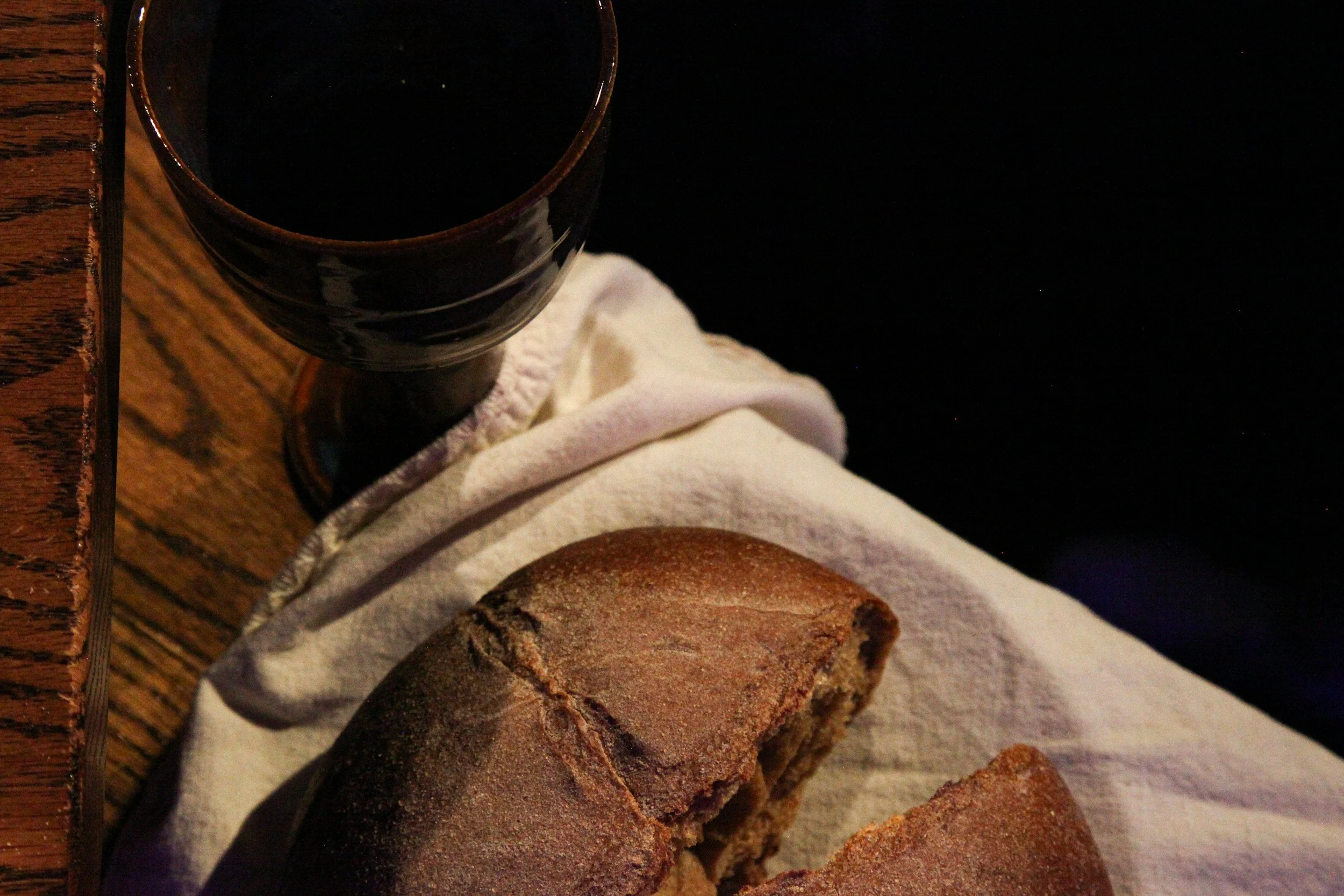
I don’t pose that question from a sense of superiority; each and every one of us, including myself, has that reaction to some degree. It’s an old habit, one that can be traced back to Babel, to the walls of Jericho, and to all the tribes that in the past have considered safety to be the same-ness. However, on October 4 the church does something truly unusual in opposition to that tendency. This is known as World Communion Sunday and it started almost a hundred years ago when one small congregation firmly maintained that the table is larger than any one culture, tradition, or nation. The idea spread because the fundamental point behind it was too valuable to remain restricted. Christians all over the world gather together to eat the same meal on that day and recall that none of us invented it and that none of us have the right to claim it as our own.
The United Methodist communion liturgy makes this point clearly: by your Spirit we are made one with Christ, one with each other, and one in our ministry to the whole world. Not one because we agree on all issues. Not one because we look the same, vote the same, or worship in the same language. Just one.
The prophet Isaiah saw this coming centuries before Christ, picturing a feast spread on God’s mountain, rich food for every people, not just the chosen nation (Isaiah 25:6, CEB). Paul insisted the promise had already come true. Christ, he wrote, “broke down the barrier of hatred that divided us” (Ephesians 2:14, CEB). Not softened it. Not managed it politely from a safe distance. Broke it down. And John, given a glimpse of where all of this is heading, saw a crowd no one could count, drawn from “every nation, tribe, people, and language” (Revelation 7:9, CEB), singing with one voice around the throne.
I have seen that wall come down. Not as a metaphor, but as a real event which I can still see clearly.
A number of years ago, my wife and I were carrying out mission work in a remote village which was under the jurisdiction of the Eldoret Diocese of the Anglican Church of Kenya. It took some people a day or more of walking to get to that church, and by the time the service started the building was too small to contain all those who had come; therefore, speakers had been set up outside so that those people sitting in the dirt and on the grass could still be able to participate in the service.
At the moment when communion was to be given out, the bishop of that diocese, Bishop Kogo, looked around and realized that the people outside the walls were about to be forgotten. So he grabbed the two of us, and the three of us walked outside to serve them ourselves.
We found out later that the people sitting outside were the poorest and lowest in that whole society, so much so that they might not have been given a seat inside even if there had been space available. The service alternated between Swahili and English, and neither of us understood a lot of it. It made no difference. The bread was passed from dirty hands to clean ones and the cup was passed from the rich to the poor, from the American to the Kenyan, between men and women who would never otherwise have shared a meal. For a few minutes the normal distinctions ceased to apply. As Paul said, we were made one.
I reflect on that morning every year at about this time, since I believe that most of us, including myself, have quietly come to the conclusion that a sense of unity of that kind belongs more to mission trips and stained glass windows than to our ordinary everyday. We say that the table is for everybody, only to go on during the rest of the week treating our differences as problems to be dealt with rather than as things to be admired. Christ did not die in order to make us all the same. He died to bring down the barrier which allows ignorance and prejudice to turn difference into a threat, so that our languages, our cultures, our histories, all that makes us different, might finally be recognised as evidence of how vast and creative God really is. World Communion Sunday alone will not achieve that, but once a year it plants a flag in the ground and makes it clear that our differences have never been the issue. It has been our fear of them.
On the 4th of October we should take that seriously, not just as a nice suggestion to merely agree with, but as a direct challenge to whatever form of that old fear has entered our own hearts this year. Who have you quietly decided should be kept outside the walls? What might it look like if we actually walked out and served them?
That is the kind of question communion is built to ask, and grace enough to answer. Whatever place you end up at the table on October 4 and no matter what tradition brings you there, go with the expectation of exactly that kind of disruption; come hungry, come different, come from wherever you have come, and discover that the meal has always been large enough for you.
Grace and peace,
Rev. Dr. Kaury Edwards